
The Ultimate Abu Simbel Adventure: Journey to the Deep South
Trekking to the temples of Abu Simbel is a bucket-list adventure. Discover what it takes to reach one of the ancient world's most remote masterpieces.
There are places in this world that demand a real journey to reach. Abu Simbel is one of them. Located 280km south of Aswan, hard against the Sudanese border, this isn't just a monument, it's an expedition to the very edge of the ancient Egyptian empire.
The Reward at the End of the Road
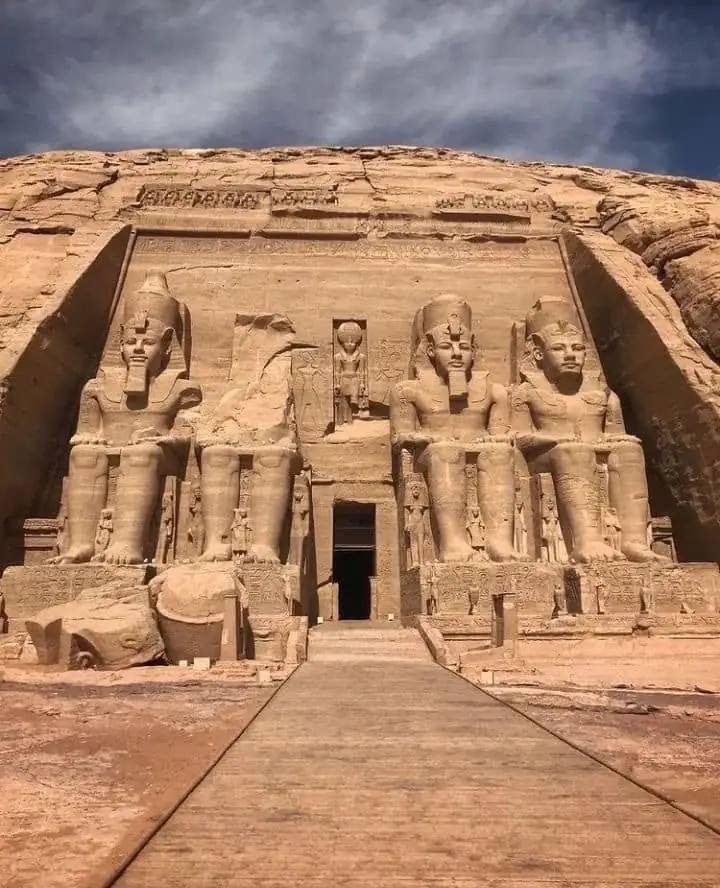
No photograph fully prepares you for the moment you emerge from the desert, look up, and see the four colossal statues of Ramesses II staring back at you across 3,200 years of history.
Carved directly into a sandstone cliff, these temples were designed to intimidate anyone entering Egypt from the south. The Great Temple was built with such mind-bending astronomical precision that twice a year, sunlight penetrates 60 metres directly into the mountain to illuminate the inner sanctuary.
Choose Your Adventure: How to Get There
Reaching Abu Simbel is half the thrill. You have three ways to conquer the journey:
The Desert Convoy: The classic adventurer's route. Departing Aswan long before dawn, you will drive for three hours through the pitch-black Sahara, watching the sun rise over an endless expanse of golden sand before finally reaching the temples.
The Lake Nasser Expedition: The most atmospheric approach. Board a vessel and spend 2-3 days sailing down Lake Nasser, navigating past crocodiles and sunken ruins, arriving at the temples by water just as ancient travelers once did.
By Air: A quick, 40-minute scenic flight from Aswan that offers unparalleled aerial views of the Sahara and the massive expanse of the lake.
The UNESCO Rescue: A Modern Engineering Thrill
The survival of this site is a modern adventure in itself. In the 1960s, the rising waters of the new Aswan High Dam threatened to drown the temples forever. In a race against time, global engineers literally cut the mountain into massive blocks and moved the entire complex 60 metres higher to save it from the floodwaters.
When you stand inside the temple today, you are standing inside an artificial mountain, a testament to both ancient ambition and modern determination.
Cite this page
Mostafa Ahmed (2025). “The Ultimate Abu Simbel Adventure: Journey to the Deep South”. Egypt Top Light Travel. https://egypttoplight.net/blog/abu-simbel-everything-you-need-to-know, updated 5 January 2026.
You are welcome to quote or reference this page. A link back to the source is appreciated.