
Was Ancient Egypt an African Civilization? What the Evidence Says
Ancient Egypt was an African civilization: on the African continent, watered by an African river, and grown from the peoples and cultures of the Nile valley and northeastern Africa, with deep connections to the Sahara and to Nubia in the south. Its people were Indigenous Northeast Africans and, like the continent itself, they varied, with continual exchange up and down the Nile. Most historians caution against forcing modern American racial categories — recent social inventions — onto a civilization that spanned three thousand years and did not think in those terms. One part is not debated at all: in the 25th Dynasty, Black African kings from the Kingdom of Kush conquered and governed Egypt as pharaohs, recorded in stone.
Few questions stir as much feeling as this one. For many Black travelers it is central to why they come to Egypt at all. So let's look at it honestly, with what the evidence actually supports.
Is ancient Egypt in Africa?
Yes. Egypt is in northeast Africa, and so was ancient Egypt. The civilization grew up along the lower Nile, an African river that flows north from the Ethiopian highlands and the great lakes, through Sudan, into Egypt and out to the Mediterranean. The Sinai Peninsula is the only part of modern Egypt in Asia, and the heartland of the pharaohs, from the Delta to Aswan, was always on the African side.
Ancient Egypt's African Story: Key Dates
| Date | What happened |
|---|---|
| About 3100 BC | Kings from the south, traditionally Narmer, unite Egypt |
| About 2855–2570 BC | Lifetime of the man from Nuwayrat whose complete genome was published in 2025 |
| About 744–656 BC | Kushite kings from Nubia rule Egypt as the 25th Dynasty |
| 2025 | Nature publishes the first complete genome from ancient Egypt |
Egypt's culture grew from Africa
Scholars broadly agree that Egyptian civilization emerged from the peoples and cultures of the Nile valley and northeastern Africa, with deep connections to the Sahara and to Nubia to the south. A few markers of that African story:
- The Sahara was once green. Thousands of years before the pharaohs, people herded cattle and built ceremonial sites in what is now desert, such as Nabta Playa in Egypt's south. As the region dried out, many moved toward the Nile.
- Egypt was unified from the south. The early kingdoms grew up in Upper Egypt, at places like Hierakonpolis (Nekhen) and Abydos, and around 3100 BC kings from the south, traditionally Narmer, united the country.
- The Egyptian language belongs to the Afroasiatic family, alongside Berber, Chadic and Cushitic languages and the Semitic languages. Most linguists place the family's origins in Africa.
- Nubia was always part of the story. Egypt and Nubia traded, fought and intermarried for three thousand years, and in the 25th Dynasty Nubian kings ruled Egypt itself.
Its roots are African, not imported from elsewhere.
Who were the ancient Egyptians?
The people of ancient Egypt were Indigenous Northeast Africans. Like the continent itself, they varied, and the population changed over three thousand years, with constant movement up and down the Nile and, especially in the north, contact with the Levant and the Mediterranean.
Ancient DNA is beginning to add detail, but the samples are still few. A study published in Nature in 2025 sequenced the first complete genome from ancient Egypt: a man buried at Nuwayrat, south of Cairo, radiocarbon-dated to about 2855–2570 BC, around the start of the Old Kingdom. Most of his ancestry traced to earlier North African Neolithic populations, and about a fifth was linked to the eastern Fertile Crescent. One person cannot stand for a whole civilization, which is exactly why scholars are careful.
Most historians also caution against forcing modern American racial categories, which are recent social inventions, onto a civilization that did not think in those terms. What is not in doubt is that ancient Egypt was African, and part of a connected African world.
What continent was ancient Egypt on?
Africa. If you have seen the question framed as "Middle Eastern or African", that reflects modern politics and language more than geography: Egypt today is an Arabic-speaking country and a member of both the Arab League and the African Union. The ancient civilization sat squarely on the African continent.
The Black pharaohs are simply history
One thing here is not debated at all. In the 25th Dynasty, kings from the Kingdom of Kush in Nubia, Black African rulers, conquered and governed Egypt as pharaohs. Kings like Piye and Taharqa are historical fact, recorded in stone. The story of the Black pharaohs and the Kandake warrior queens of Nubia is real, documented heritage. Read more on the Black pharaohs of Egypt.
Where to see the evidence for yourself
- The Grand Egyptian Museum and the Egyptian Museum in Cairo, where the story runs from the earliest Nile cultures to the pharaohs.
- Karnak in Luxor, where the Kushite king Taharqa built in the greatest temple of the age.
- Aswan and the Nubian Museum, where Egypt meets Nubia, and the living Nubian villages along the river.
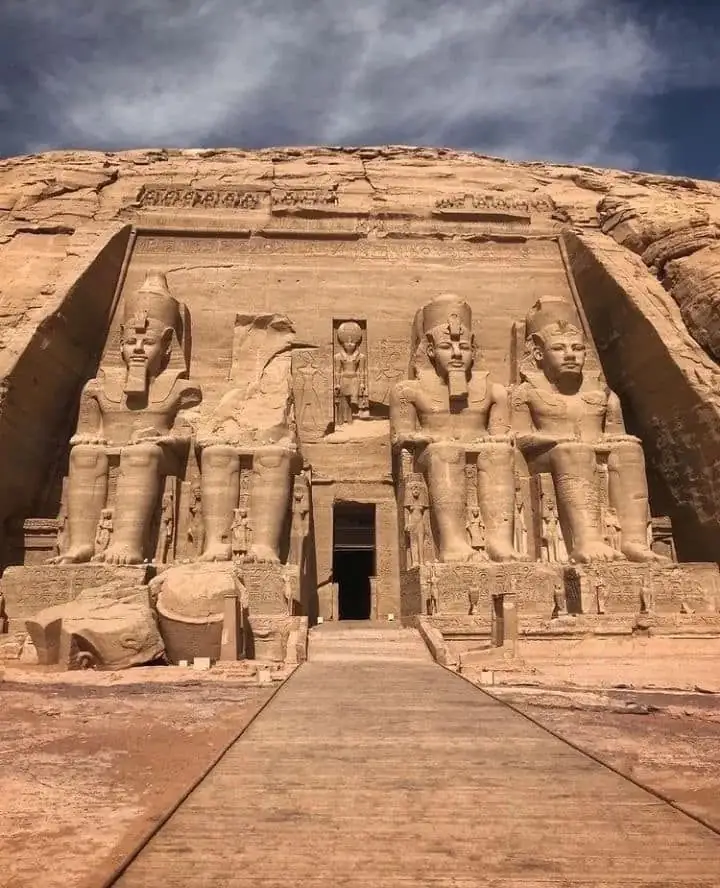
- Abu Simbel, deep in what was ancient Nubia.
Our Kemet & the Black Pharaohs journey visits all of them with an Egyptologist who argues from the monuments themselves. See also Kemet: what the ancient Egyptians called their own land.
Why it resonates
For travelers whose own history was too often erased or diminished, standing in a brilliant ancient African civilization is affirming and profound. You do not need to overstate the case to feel it. The documented reality, an African civilization, an African population, and Black African pharaohs who ruled it, is powerful enough on its own.
To see the evidence with an Egyptologist, design a custom tour around Cairo, Luxor, Aswan and Abu Simbel, or read how our private Egypt tours work.
See this heritage for yourself, with a licensed Egyptologist who tells the story right.
Explore our heritage journeysFrequently Asked Questions
Was ancient Egypt an African civilization?
Yes. Ancient Egypt was located in Africa and grew out of the peoples and cultures of the Nile valley and northeastern Africa, with deep ties to the Sahara and Nubia.
Were there Black pharaohs?
Yes, and it is documented history. In the 25th Dynasty, Kushite kings from Nubia such as Piye and Taharqa ruled Egypt as pharaohs.
Were the ancient Egyptians Black?
The ancient Egyptians were Indigenous Northeast Africans and varied across a vast span of time and geography. Most scholars caution against applying modern racial categories to antiquity, while affirming that Egypt was an African civilization.
What continent was ancient Egypt on?
Africa. Ancient Egypt grew up along the lower Nile in northeast Africa; only the Sinai Peninsula of modern Egypt lies in Asia.
Cite this page
Mohamed Hassan (2026). “Was Ancient Egypt an African Civilization? What the Evidence Says”. Egypt Top Light Travel. https://egypttoplight.net/blog/african-origins-ancient-egypt-evidence, updated 13 November 2026.
You are welcome to quote or reference this page. A link back to the source is appreciated.