
Taharqa: The Kushite Pharaoh Who Ruled Two Lands
Taharqa was a Kushite pharaoh from Nubia who ruled both Kush and Egypt in the 7th century BC, and the greatest king of Egypt's 25th Dynasty. Kings from the Nubian Kingdom of Kush had conquered a divided Egypt in the 8th century BC and ruled it as pharaohs; Taharqa presided over a cultural revival and a building programme up and down the Nile, including additions at Karnak. He appears in the Hebrew Bible as Tirhakah — a rare moment where a Black African pharaoh steps directly into the wider historical record. His monuments are carved evidence that Black African kings ruled Egypt at its own game.
Among the Black pharaohs of the 25th Dynasty, one name stands out: Taharqa, a Kushite king from Nubia who ruled an empire stretching from deep in Africa to the Mediterranean, and left his mark from Sudan to Karnak.
Who was Taharqa?
Taharqa was king of Kush and pharaoh of Egypt from 690 to 664 BC, the most powerful ruler of the 25th Dynasty. A son of the conquering king Piye, he ruled both lands from Napata in Nubia and Memphis in Egypt, and he was the greatest builder of the Kushite pharaohs.
From Kush to the throne of Egypt
In the 8th century BC, kings from the Nubian Kingdom of Kush conquered a divided Egypt and ruled it as pharaohs. Taharqa grew up in that world. By his own account, he came north to Egypt as a young man with the army of his predecessor, Shebitku, and he was crowned at Memphis in 690 BC. Read the full dynasty in The Black Pharaohs: The Kushite Kings Who Ruled Egypt.
A great builder
Early in his reign an exceptionally high Nile flood brought a rich harvest, and Taharqa recorded it on stelae as a sign of divine favour. The years of plenty paid for one of the largest building programmes of the age:
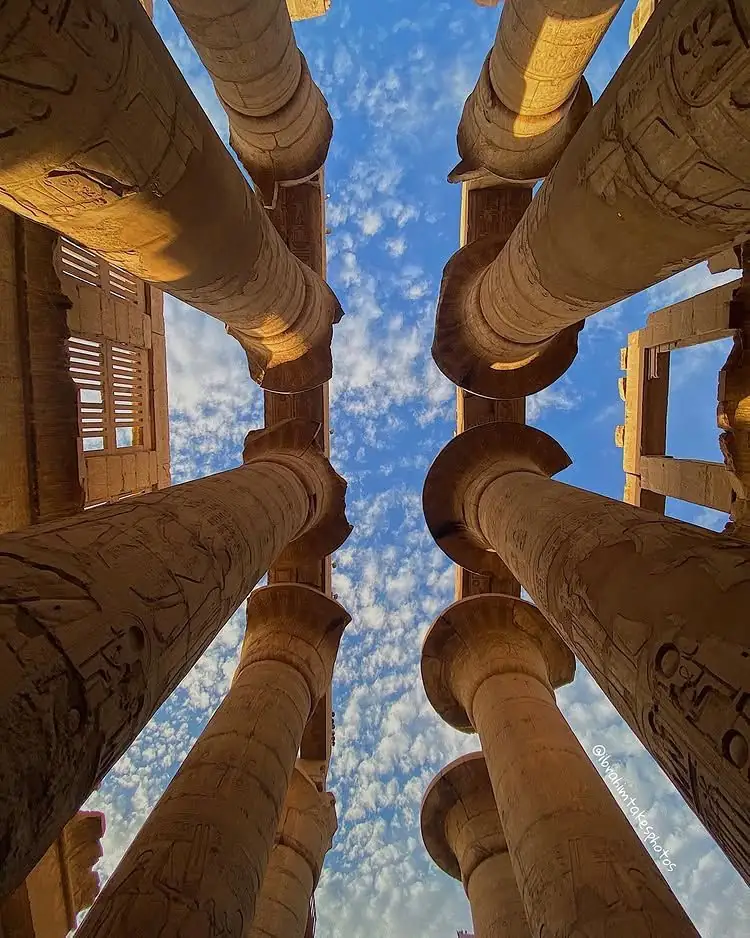
- Karnak, Luxor: a monumental kiosk in the temple's first court. One of its columns still stands complete, among the tallest in the precinct.
- Jebel Barkal, Sudan: temples at the foot of Kush's sacred mountain.
- Kawa and Sanam, Sudan: new temples to Amun in the Nubian heartland. A granite sphinx of Taharqa from Kawa is now in the British Museum.
Taharqa in the Bible
Taharqa appears in the Hebrew Bible as Tirhakah, "king of Cush", in 2 Kings 19:9 and Isaiah 37:9, marching out against the Assyrian king Sennacherib. It is a rare moment when a Black African pharaoh steps directly into the wider historical record of the ancient Near East.
War with Assyria
Taharqa's reign was overshadowed by the Assyrian Empire. He turned back an Assyrian invasion in 674 BC, but in 671 BC the Assyrian king Esarhaddon captured Memphis, along with members of Taharqa's family. Taharqa fought back and retook the city, until the next Assyrian king, Ashurbanipal, drove him south again. He died in 664 BC.
Taharqa's pyramid at Nuri
Taharqa was buried not in Egypt but at Nuri in Sudan, across the Nile from Jebel Barkal, beneath the largest pyramid there. He was the first king buried at Nuri. His successor Tantamani was the last Kushite pharaoh to rule in Egypt.
Why his story matters
Taharqa is proof, carved in stone, that Black African kings ruled Egypt at its own game. For heritage travelers, learning his story in the temples he touched is exactly the kind of connection that makes an Egypt trip profound.
Walk the monuments of the Black pharaohs.
See our Kemet & Nubia journeyFrequently Asked Questions
Who was Taharqa?
Taharqa was a Kushite (Nubian) king of Egypt's 25th Dynasty in the 7th century BC, one of the Black pharaohs, who ruled both Kush and Egypt and built monuments across the Nile.
Is Taharqa in the Bible?
Yes. He appears in the Hebrew Bible as Tirhakah, one of the rare moments a Black African pharaoh enters the wider historical record.
When did Taharqa rule?
From 690 to 664 BC, as king of Kush and pharaoh of Egypt in the 25th Dynasty.
Where was Taharqa buried?
At Nuri in Sudan, beneath the largest pyramid there, across the Nile from the sacred mountain of Jebel Barkal.
Cite this page
Mohammed Hossam (2026). “Taharqa: The Kushite Pharaoh Who Ruled Two Lands”. Egypt Top Light Travel. https://egypttoplight.net/blog/taharqa-kushite-pharaoh, updated 2 November 2026.
You are welcome to quote or reference this page. A link back to the source is appreciated.