
Nefertiti & Akhenaten: The Revolution That Shook Ancient Egypt
A pharaoh who tried to change Egypt's gods, and the legendary queen at his side. The dramatic story of Akhenaten, Nefertiti and the Amarna revolution.
For a few extraordinary years, one pharaoh tried to overturn everything Egypt believed, and his queen became one of the most famous faces in history. This is the story of Akhenaten and Nefertiti.
The pharaoh who changed the gods
In the 14th century BC, the pharaoh Akhenaten swept away Egypt's many gods and declared devotion to a single one, the Aten, the disc of the sun. He built a brand-new capital in the desert and reshaped art and religion overnight. It was one of the boldest experiments in the ancient world.
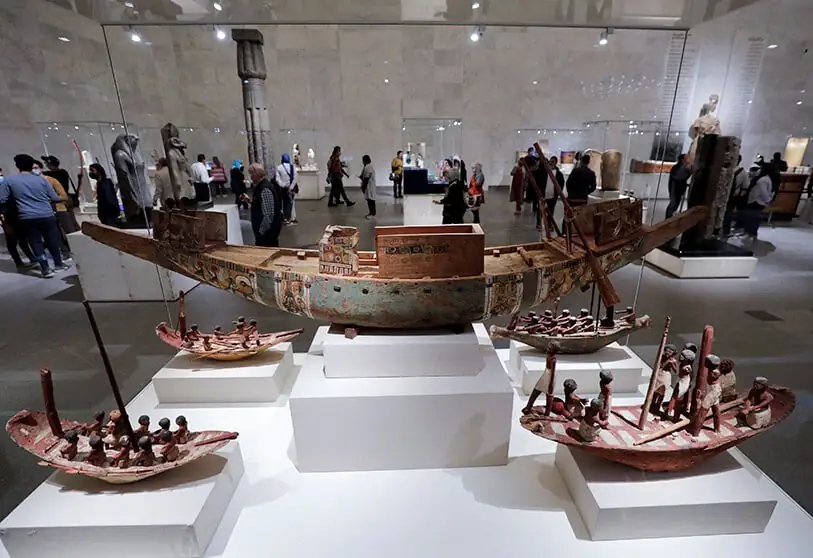
Nefertiti, the powerful queen
At his side stood Nefertiti, whose name means 'a beautiful woman has come'. She was far more than a consort, appearing in art as a near-equal, even shown striking down enemies like a king. Her painted bust is one of the most recognised images of the ancient world.
The revolution undone
After Akhenaten's death, Egypt reversed course, restored the old gods, and a boy-king named Tutankhamun, likely his son, moved the capital back. Later rulers tried to erase the whole episode. It is one of history's most gripping stories, and you can see its strange, beautiful art in Egypt's museums today.
See the treasures of the pharaohs up close.
Explore our Cairo journeysFrequently Asked Questions
Who was Akhenaten?
A 14th-century BC pharaoh who replaced Egypt's many gods with devotion to a single sun god, the Aten, built a new capital, and transformed art and religion before it was all reversed after his death.
Who was Nefertiti?
Akhenaten's queen and one of the most famous women of the ancient world, shown in art as a near-equal ruler. Her painted bust is among the most recognised images from antiquity.
Cite this page
Mostafa Ahmed (2026). “Nefertiti & Akhenaten: The Revolution That Shook Ancient Egypt”. Egypt Top Light Travel. https://egypttoplight.net/blog/nefertiti-akhenaten-amarna-revolution.
You are welcome to quote or reference this page. A link back to the source is appreciated.