
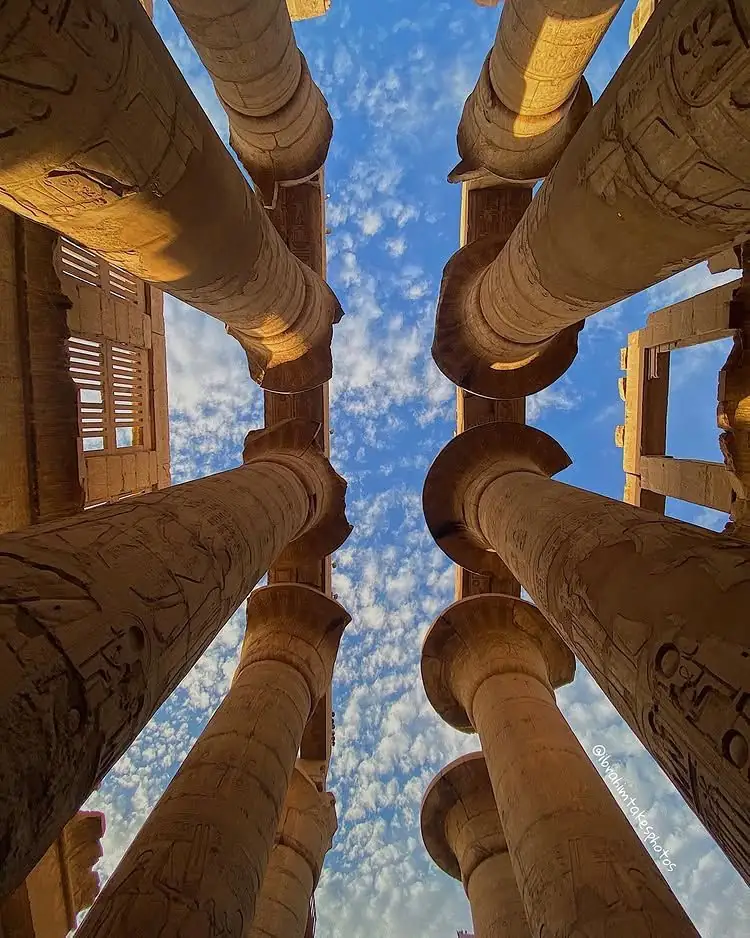
Kemet: What the Ancient Egyptians Called Their Own Land
Long before the name Egypt, its people called it Kemet, the Black Land. Here's what that name really means.
The name we use, Egypt, comes from the Greeks. But the people who built the Pyramids had their own name for their land: Kemet. Understanding it adds a beautiful layer to any visit.
What does Kemet mean?
Kemet, written kmt in hieroglyphs, means "the Black Land". It referred to the rich, dark, fertile soil that the Nile's annual flood spread across the valley, the soil that made the whole civilization possible. In hieroglyphs the word is spelled with a sign showing a strip of crocodile skin, which stood for the sound km and the idea of blackness, followed by a sign meaning a town or settled land.
The Names of Egypt Through Time
| Name | Language and era | Meaning |
|---|---|---|
| Kemet (kmt) | Ancient Egyptian, the pharaonic era | The Black Land, the fertile Nile valley |
| Deshret | Ancient Egyptian | The Red Land, the desert on either side |
| Tawy | Ancient Egyptian | The Two Lands, Upper and Lower Egypt |
| Aigyptos | Greek | Most scholars trace it to Hut-ka-Ptah, Ptah's temple at Memphis |
| Misr | Arabic, today | The name Egyptians use now |
Kemet and Deshret: the Black Land and the Red Land
The ancient Egyptians saw their world as two contrasting halves:
- Kemet, the Black Land: the green, farmed strip along the Nile, renewed every year by the flood. It meant life, order and plenty.
- Deshret, the Red Land: the desert on either side, barren, dangerous and the home of foreign peoples. The same word also named the Red Crown of Lower Egypt.
The difference between the two was not abstract. In many places you can stand with one foot in green fields and the other on desert sand, so sharp is the line the flood drew. Black, the colour of that soil, also meant fertility and rebirth, which is why Osiris, god of resurrection, is often shown with black or green skin. Read the myth of Osiris, Isis and Horus.
Other names for Egypt
- Tawy, "the Two Lands": Upper and Lower Egypt, united under one king.
- Egypt: from the Greek Aigyptos, which most scholars trace to Hut-ka-Ptah, the name of the great temple of the god Ptah at Memphis.
- Misr: the Arabic name Egyptians use today.
Does Kemet refer to the land or the people?
Most Egyptologists read Kemet as a description of the soil, because the word ends with the sign for a place. Some scholars, most famously the Senegalese historian Cheikh Anta Diop, argued that it also described the people. That debate continues. What is not in doubt is that this was an African civilization, shaped by an African river. Read Was Ancient Egypt an African Civilization? What the Evidence Says.
Why the name resonates today
For many heritage travelers, the name Kemet carries real meaning, a sense of connection to Africa and to a civilization of brilliance. It has become, for many, a powerful symbol of African pride and presence at the dawn of recorded history. We think both the scholarship and the feeling deserve respect.
Feeling it on the ground
Stand in the green valley with the desert rising on either side and the meaning of Kemet becomes obvious in an instant. The view is clearest in Upper Egypt, from the West Bank at Luxor or along the river between Aswan and Luxor on a Nile cruise. Your Egyptologist can show you the very line where the Black Land meets the Red.
Read more in our guide to Nubia and the Black pharaohs, or browse our heritage group tour.
The 2027 total solar eclipse will cross the Black Land itself: our eclipse tour watches totality at Karnak. You can also design a custom tour around Upper Egypt, or read how our private Egypt tours work.
Want to experience Kemet for yourself? Our private, Egyptologist-led Kemet & the Black Pharaohs: A Nubian Heritage Journey is built for exactly this journey.
Explore the TourFrequently Asked Questions
What does Kemet mean?
Kemet (kmt) means "the Black Land", the ancient Egyptians’ name for their country, after the dark, fertile soil the Nile flood left along the valley.
What is the difference between the Black Land and the Red Land?
Kemet, the Black Land, was the fertile farmland along the Nile. Deshret, the Red Land, was the barren desert on either side. One meant life and order, the other danger and chaos.
Is Kemet the original name of Egypt?
It is the most common name the ancient Egyptians used for their land. They also called it Tawy, the Two Lands. "Egypt" comes later, from the Greek Aigyptos.
Cite this page
Mohamed Hassan (2025). “Kemet: What the Ancient Egyptians Called Their Own Land”. Egypt Top Light Travel. https://egypttoplight.net/blog/kemet-the-black-land, updated 13 November 2026.
You are welcome to quote or reference this page. A link back to the source is appreciated.