
Osiris, Isis and Horus: The Great Myth Behind Egypt's Temples
Murder, resurrection and a mother's love, the myth of Osiris, Isis and Horus is the story that shaped ancient Egyptian religion. Here's the tale, and where to feel it.
To understand Egypt's temples, you need one story above all others: the myth of Osiris, Isis and Horus. It is drama, romance and resurrection, and it echoes through nearly every site you'll visit.
The story
Osiris, a good king, was murdered and dismembered by his jealous brother Set. His devoted wife Isis, a goddess of magic, gathered the pieces and brought him back long enough to conceive a son, Horus. Osiris became lord of the afterlife, while Horus grew up to avenge his father and reclaim the throne. Life, death and rebirth, all in one tale.
Where to feel it
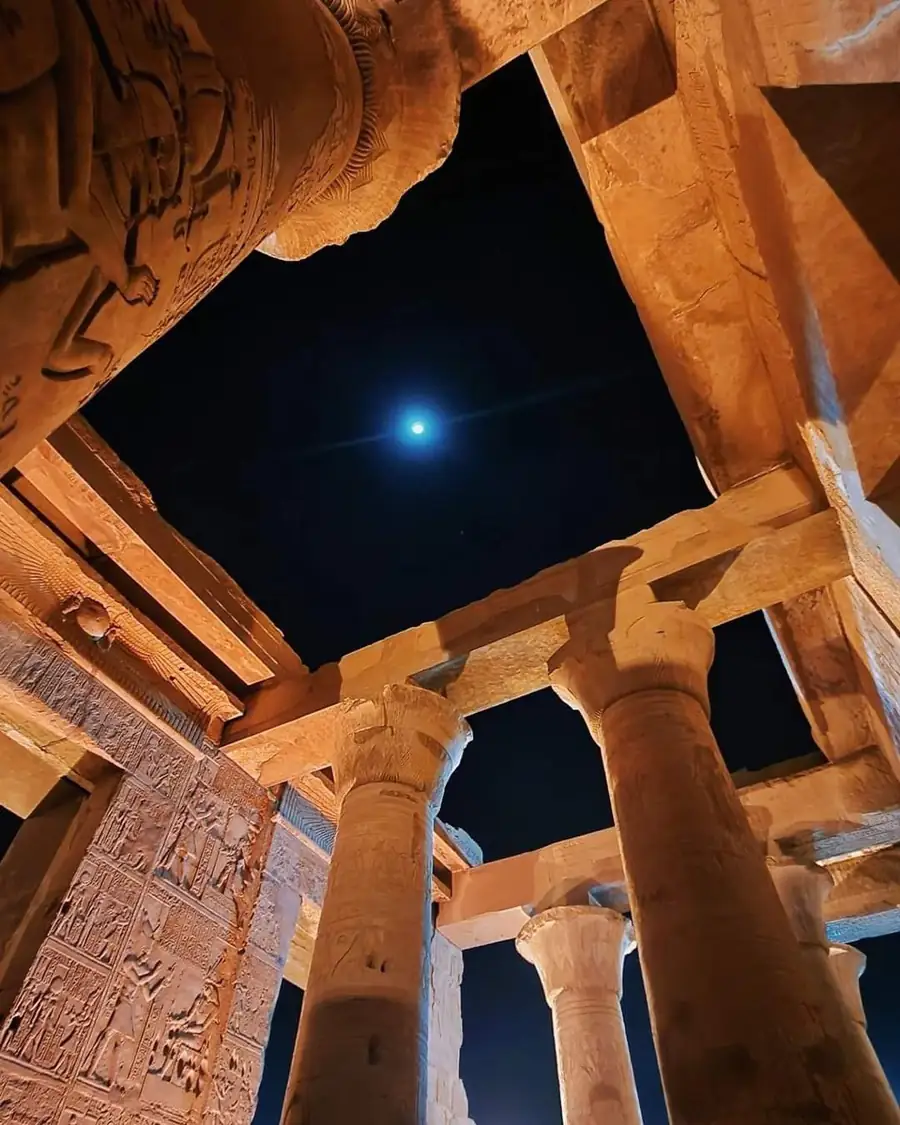
The myth is written into the stones: Isis is worshipped at beautiful Philae in Aswan, Horus at the towering temple of Edfu, and Osiris at sacred Abydos. Knowing the story turns a wall of carvings into a gripping narrative.
Why it endures
The themes of loss, devotion and rebirth are among the oldest and most human in the world. For many travelers, learning this myth is the key that unlocks the whole of ancient Egypt.
Follow the great myth along the Nile.
Explore our Nile journeysFrequently Asked Questions
What is the myth of Osiris, Isis and Horus?
Osiris was murdered by his brother Set; his wife Isis revived him long enough to conceive Horus, who later avenged his father. Osiris became lord of the afterlife, a story of life, death and rebirth.
Where can I see this myth in Egypt?
Isis at Philae in Aswan, Horus at the temple of Edfu, and Osiris at Abydos. The myth is carved into temples up and down the Nile.
Cite this page
Mostafa Ahmed (2026). “Osiris, Isis and Horus: The Great Myth Behind Egypt's Temples”. Egypt Top Light Travel. https://egypttoplight.net/blog/osiris-isis-horus-myth.
You are welcome to quote or reference this page. A link back to the source is appreciated.