
Hatshepsut: The Woman Who Became Pharaoh
She ruled as king, built one of Egypt's most beautiful temples, and led it into a golden age, the extraordinary story of Hatshepsut, ancient Egypt's great female pharaoh.
More than 3,000 years ago, a woman took the throne of Egypt not as a queen but as pharaoh, ruling in her own right over one of the most powerful nations on earth. Her name was Hatshepsut, and her story still stuns visitors today.
A king in her own right
Hatshepsut ruled in the 15th century BC and was one of the most successful pharaohs of the 18th Dynasty. Rather than serve as regent for her young stepson, she claimed the full title and regalia of pharaoh, and Egypt prospered under her, with trade expeditions, wealth and a great building programme.
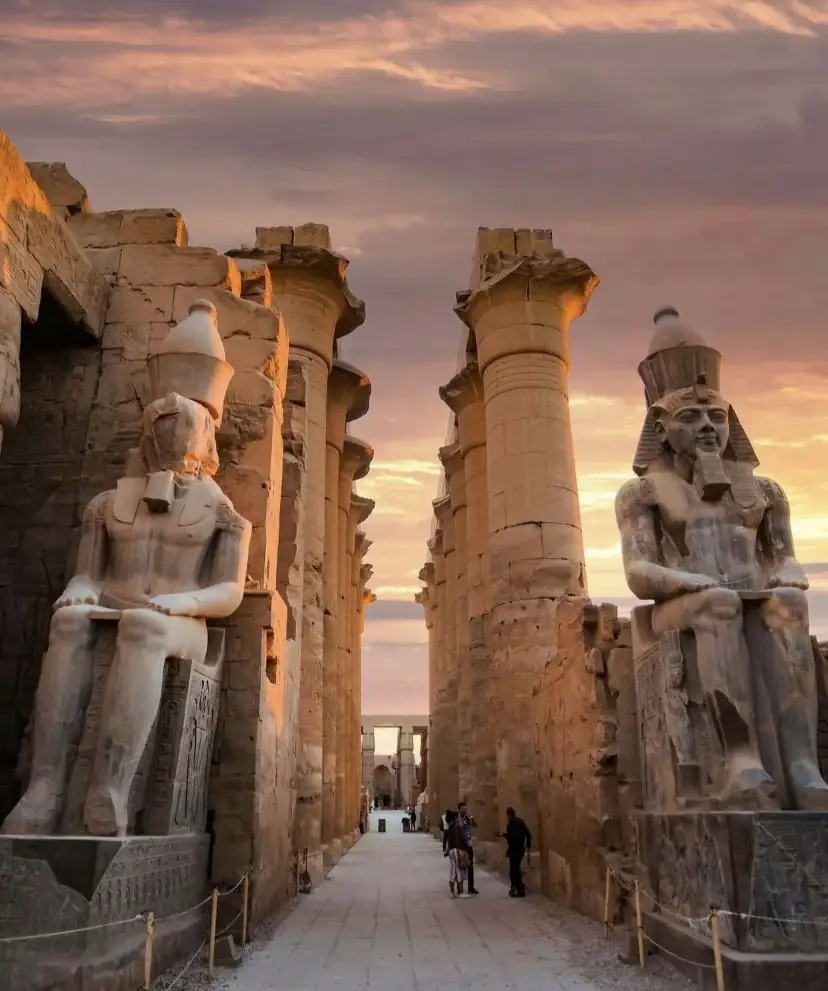
Her temple
Her mortuary temple at Deir el-Bahari, on the Luxor West Bank, rises in dramatic terraces against a wall of golden cliffs. It is one of the most striking pieces of architecture in all of Egypt, and centuries ahead of its time.
Why she resonates
For many travelers, and especially for women, standing before Hatshepsut's temple is deeply moving: proof of a woman who claimed the highest power in the ancient world and wielded it brilliantly. Her successors tried to erase her; history remembered her anyway.
Stand where a woman ruled as pharaoh.
Explore our Luxor journeysFrequently Asked Questions
Was Hatshepsut a real pharaoh?
Yes. Hatshepsut ruled Egypt in her own right in the 15th century BC as one of the most successful pharaohs of the 18th Dynasty, taking the full title and regalia of a king.
Where is Hatshepsut's temple?
Her mortuary temple is at Deir el-Bahari on the Luxor West Bank, a dramatic terraced structure set against golden cliffs.
Cite this page
Mostafa Ahmed (2026). “Hatshepsut: The Woman Who Became Pharaoh”. Egypt Top Light Travel. https://egypttoplight.net/blog/hatshepsut-female-pharaoh.
You are welcome to quote or reference this page. A link back to the source is appreciated.