
Inside a Nubian Village in Aswan: Egypt's Living Black Culture
A Nubian village visit near Aswan is an afternoon, not a photo stop. You arrive by boat past Elephantine Island, are welcomed into a family home painted in vivid colour for karkade tea, henna, spices and craft, meet the household crocodiles, and usually end up dancing to duff drums and call-and-response singing. A host family cooks the meal and you eat it in their home, seated together on cushions. Which village you visit depends on your group size, the time you sail and the season, and an overnight stay in a village can be arranged rather than a call-in visit. October to April is the most comfortable time to go.
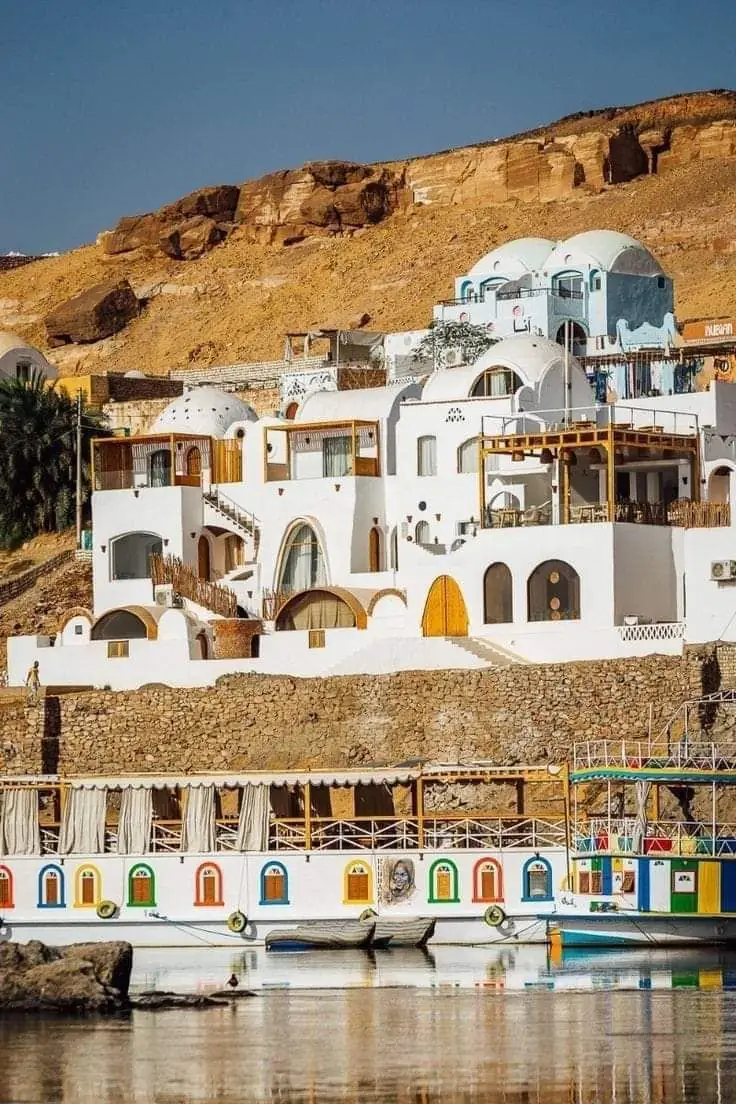
South of Aswan, past the granite islands where the Nile runs blue and slow, the houses turn to bright blocks of indigo, ochre and rose. This is Nubia, one of Africa's oldest cultures, and its villages are among the most joyful places you can visit in Egypt. Most tours treat a Nubian village as a quick photo stop — twenty minutes, a few frames of a painted wall, back on the boat. It deserves far more. This guide is what a real afternoon there actually looks like.
Who the Nubians are
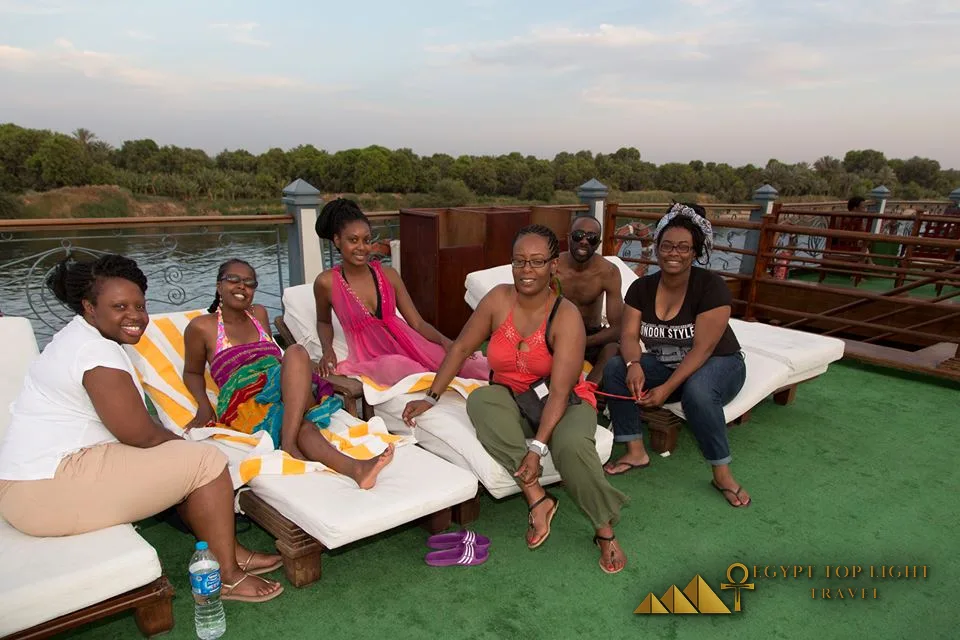
The Nubians are an Indigenous African people whose homeland stretched along the Nile through southern Egypt and northern Sudan. Their history reaches back thousands of years, to the powerful kingdom of Kush and the Black pharaohs who once ruled Egypt itself. Today Nubian people keep their own language, music, food and architecture alive — a distinct African culture within modern Egypt, not a footnote to the pharaohs.
That continuity survived a deliberate rupture. When the High Dam was built, much of Nubian land and heritage disappeared beneath Lake Nasser, and communities were resettled away from the river their whole culture had been built around. The villages near Aswan today are, in part, where that displaced culture regathered. It is worth knowing before you arrive: the colour and the noise of the welcome sit on top of a story about loss and persistence. For the deeper history, see our piece on Nubia, the ancient Black kingdom, and the Nubian Museum in Aswan, which exists largely because of what the dam covered.
Which village you will visit
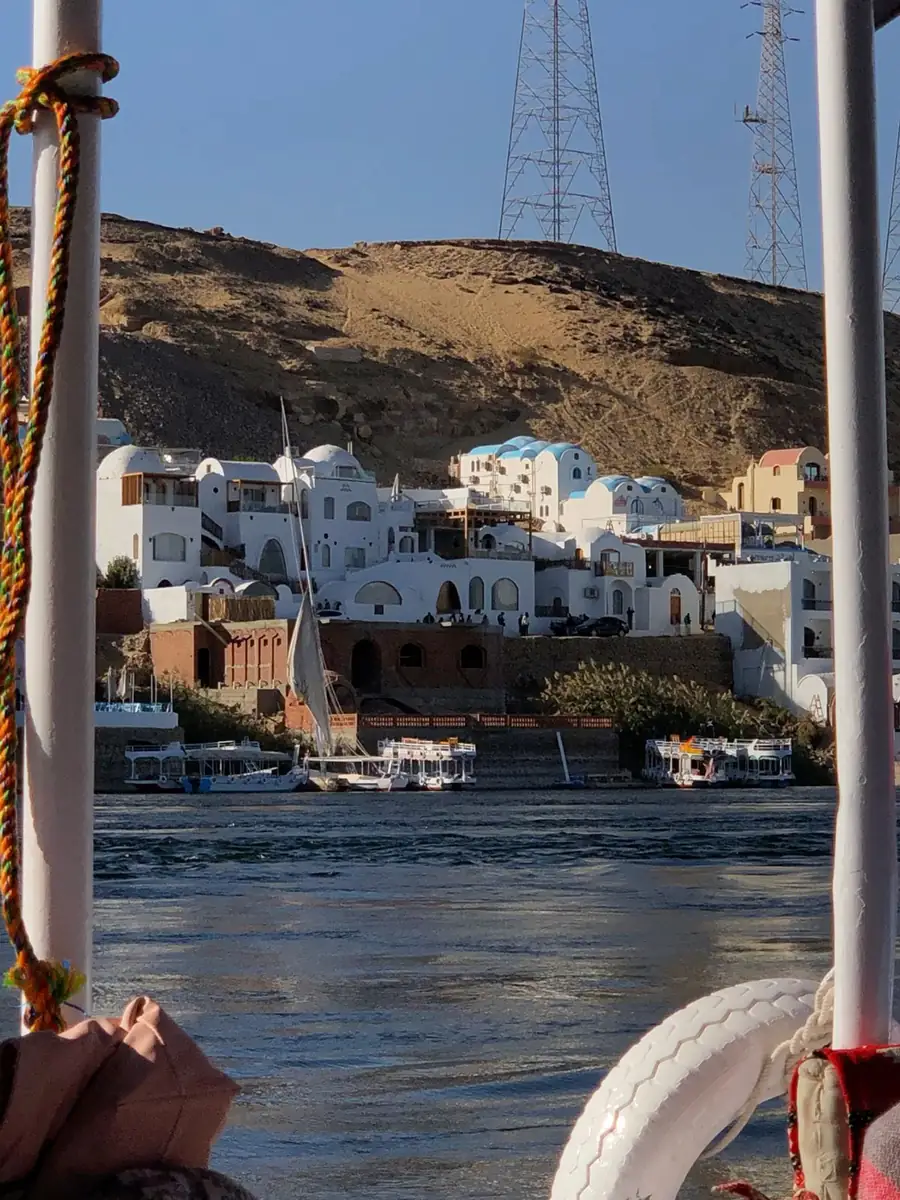
Nubian communities sit along the Nile just south of Aswan, on the west bank and on islands such as Gharb Soheil, reached by a short boat ride past the granite islands and Elephantine. There is no single "the" Nubian village, and an itinerary that names one in a brochure is usually working from a script rather than a relationship.
Which village your day lands in depends on your group — how many of you there are, what time you sail, the season, and which families are hosting when you travel. A couple on a private cruise and a twenty-strong HBCU chapter are not comfortable in the same courtyard, and we place groups accordingly. Ask us and we will tell you where your particular trip is going.
What a visit is really like
You usually arrive by boat, gliding past Elephantine Island and the desert dunes that tumble down to the water. The welcome starts at the dock — often loud, usually musical, and aimed at you rather than performed near you.
From there the afternoon unfolds at a pace that has nothing in common with a monument visit.
- The family home. You are invited inside a house painted in vivid colour, sat down on cushions, and handed a glass of karkade — the deep-red hibiscus tea, served hot or iced depending on the month.
- Henna, spices and craft. The henna work, the spice baskets and the beadwork and weaving Nubian families are known for are shown to you properly, and you can buy directly from the household.
- The crocodiles. Many Nubian homes keep a crocodile. It surprises first-time visitors more than anything else on the day, and it is a genuine part of village life rather than a prop set out for tourists.
- The music. Nubian music is built on the duff drum, hand-clapping and call-and-response singing, and it is close to impossible to sit still through. Most visits end with guests up and dancing with their hosts.
- The school and the lanes. Children play in the lanes, and the village school is part of the day — one of the moments guests raise most often afterwards.
- The market. Time to walk it properly instead of photographing it from a passing boat.
- The dunes. The sand comes right down to the water, and sandboarding down it is there for anyone who wants it.
All of that is real and all of it is available. How much of it you fit in comes down to how long you have and how many of you there are — an afternoon slotted into a cruise day is not the same as a full day given over to it.
The meal, cooked by the family
The meal is not catered in and it is not eaten in a restaurant. A host family cooks it and you eat it in their home, seated together on cushions: slow-cooked tagines, fragrant rice, fresh flatbread, dates, and more karkade. It is generous, homely food, and sharing it is the part travelers describe years later, when the temples have started to blur together. More on the flavours and the rhythms in our guide to Nubian food and music.
Staying the night, not just visiting
An afternoon is enough to be welcomed. A night is enough to stop being a visitor.
An overnight stay in a Nubian village is something we can arrange, rather than a call-in on the way to somewhere else. You wake up in the village, to the river and the morning noise of a working community instead of a hotel corridor. It is the single biggest upgrade available on a Nubian day, and it is why our Kemet & the Black Pharaohs journey is built to stay in the villages rather than pass through them. Say so when you enquire, because it is arranged with the host family in advance rather than on the day.
Why it matters for heritage travelers
For many Black travelers, the Nubian village is the emotional heart of an Egypt trip. This is living African culture, not a museum case — a direct thread to the deep African roots of the Nile valley. Sitting with a Nubian family, hearing the language and the music, is a form of connection the pyramids alone cannot give. Guests on our African American heritage journey often name this afternoon, rather than Giza, as the day the trip clicked.
If the history behind it is the draw, read on the Black pharaohs of Kush and the Nubian pyramids at Meroë — the same civilisation, further upriver.
Being a good guest
A few things worth knowing before you arrive:
- Ask before photographing people, particularly children, and particularly inside a home. The village is not a set.
- If you want to buy craft or spices, buy from the household directly. It is the most direct way your visit registers.
- Dress as you would to visit anyone's home. Shoulders and knees covered is comfortable and courteous, and this is a working village rather than a resort — see our guide on what to wear in Egypt.
- Accepting the tea when it is offered goes a long way.
When to go, and what it pairs with
Aswan is at its best from October to April, when the days are warm rather than fierce. Between May and September the heat in the deep south is serious. We run private journeys year-round and adjust the pace to the season, but if you have a free choice of months, take the cooler half of the year.
A Nubian village pairs naturally with the island Temple of Philae in the morning, a sunset felucca sail among Aswan's granite islands afterwards, and Abu Simbel deeper into ancient Nubia. That is exactly how our Aswan days are built — Philae, the village, then the felucca at golden hour.
How it fits a trip, and what it costs
Almost everyone experiences this as an afternoon inside a longer private journey rather than as a standalone excursion, so the honest way to price it is by the trip it belongs to. Journeys that include time in a living Nubian village near Aswan start from:
- Black Women's Solo-Friendly Egypt Tour and the Black Men's equivalent — 7 days, from $845 USD
- African American Group Tour: Egypt & Nubia Heritage Journey — 8 days, from $1,390 USD
- HBCU & Divine Nine Egypt Tour — 8 days, from $1,390 USD
- Black Girls' Trip to Egypt — 8 days, from $1,390 USD
- Kemet & the Black Pharaohs: A Nubian Heritage Journey — 8 days, from $1,460 USD
- Black Family Egypt Tour — 10 days, from $1,690 USD
Every one of those is private and tailor-made, so the Nubian day can be lengthened, moved, or turned into an overnight. Tell us which one you like and we will build the itinerary around it.
Ready to experience living Nubian culture for yourself?
Our private heritage journeys spend real time in Aswan and Nubia, not a rushed stop.
Explore our heritage toursFrequently Asked Questions
Where are the Nubian villages in Aswan?
They sit along the Nile just south of Aswan, on the west bank and on islands like Gharb Soheil, usually reached by a short boat ride past the granite islands and Elephantine.
Which Nubian village will I visit?
It depends on your trip. The village is chosen around your group size, the time of day you sail, the season and which families are hosting when you travel, so we confirm it for your specific itinerary rather than promising one village to everybody.
What actually happens on a Nubian village visit?
A welcome at the dock, then a family home for karkade (hibiscus tea), henna, spices and craft, the household crocodiles, drumming and call-and-response singing that usually ends in dancing, the village school and lanes, the market, and sandboarding on the dunes that run down to the water. How much you fit in depends on how long you have.
Is a meal included, and who cooks it?
A host family cooks it and you eat in their home, seated together on cushions: slow-cooked tagines, fragrant rice, fresh flatbread, dates and karkade. It is not catered in and it is not a restaurant.
Can I stay overnight in a Nubian village?
Yes. We can arrange an overnight stay rather than a call-in visit, so you wake up in the village. It has to be arranged with the host family in advance, so mention it when you enquire. Our Kemet & the Black Pharaohs journey is built around staying in the villages.
Is visiting a Nubian village respectful?
Yes, when you go with a guide who has a genuine relationship with the community and your visit supports local families directly. We work with Nubian hosts so your visit is a real welcome, not a staged stop. Ask before photographing people, and buy craft from the household directly.
What is the best time to visit?
October to April brings the most comfortable weather in Aswan. May to September is seriously hot in the deep south; we run private journeys year-round and adjust the pace to the season. A Nubian village pairs beautifully with Philae Temple, a sunset felucca sail and a trip to Abu Simbel.
How much does a Nubian village visit cost?
Almost everyone experiences it as an afternoon within a longer private journey rather than as a standalone excursion, so it is priced by the trip. Journeys including a living Nubian village start from $845 USD for 7 days, and our Kemet & the Black Pharaohs Nubian heritage journey is 8 days from $1,460 USD.
Cite this page
Mohammed Hossam (2026). “Inside a Nubian Village in Aswan: Egypt's Living Black Culture”. Egypt Top Light Travel. https://egypttoplight.net/blog/nubian-village-aswan-guide, updated 4 August 2026.
You are welcome to quote or reference this page. A link back to the source is appreciated.