
Hair and Skin Care in Egypt: A Practical Guide for Black Travelers
Egypt's dry air and strong sun dry out curly and coily hair quickly and affect every skin tone. Black travelers do best arriving in a protective style such as braids, twists or locs, moisturising daily with a leave-in and an oil or butter, covering hair with a scarf or hat at open-air sites, and sleeping in a satin bonnet. A broad-spectrum SPF 30+ that suits deeper skin is essential, along with body oil against ashiness and plenty of bottled water. Products made for type 4 hair are hard to find in Egypt, so bring your own, and note that Egypt uses 220V power with European plugs.
It's one of the questions our Black guests ask most quietly, usually after the big ones about safety and cost: "What do I do about my hair?" It matters. You'll be in photos at the Pyramids, on a felucca, in front of Karnak, and you want to feel like yourself in every one of them. Here's the practical guide, from a team that hosts Black American groups every season.
What Egypt's climate does to hair and skin
Egypt is a desert country with a river through it. Away from the coast, the air is very dry for most of the year, and in Upper Egypt (Luxor and Aswan) summer days are often above 40°C (104°F). Three things follow:
- Moisture leaves your hair quickly. Dry air pulls water out of curls and coils, so hair that behaves at home can feel brittle by day three.
- The sun is intense. Egypt sits far enough south that the midday sun is strong even in winter, and you will spend hours outdoors at open-air sites with little shade.
- Dust and wind are part of the trip. Desert sites, felucca rides and cruise decks bring sand and breeze. In spring, hot dusty winds called the khamaseen can blow for a day or two at a time.
Alexandria and the Red Sea resorts are more humid, so if your trip ends at the beach, expect your hair to change again.
| Where you are | What the air is like | What it means for your routine |
|---|---|---|
| Cairo and Giza | Dry, dusty at the Pyramids | Daily moisture, cover hair at the plateau |
| Luxor and Aswan | Very dry, very hot in summer | Heavier leave-in and oil, shade and hats |
| On a Nile cruise or felucca | Dry, breezy on deck | Scarf or wrap for wind, sunscreen on deck |
| Hurghada, Sharm, Alexandria | More humid, salt water | Rinse after the sea or pool, expect some frizz |
Hair: what works on an Egypt trip
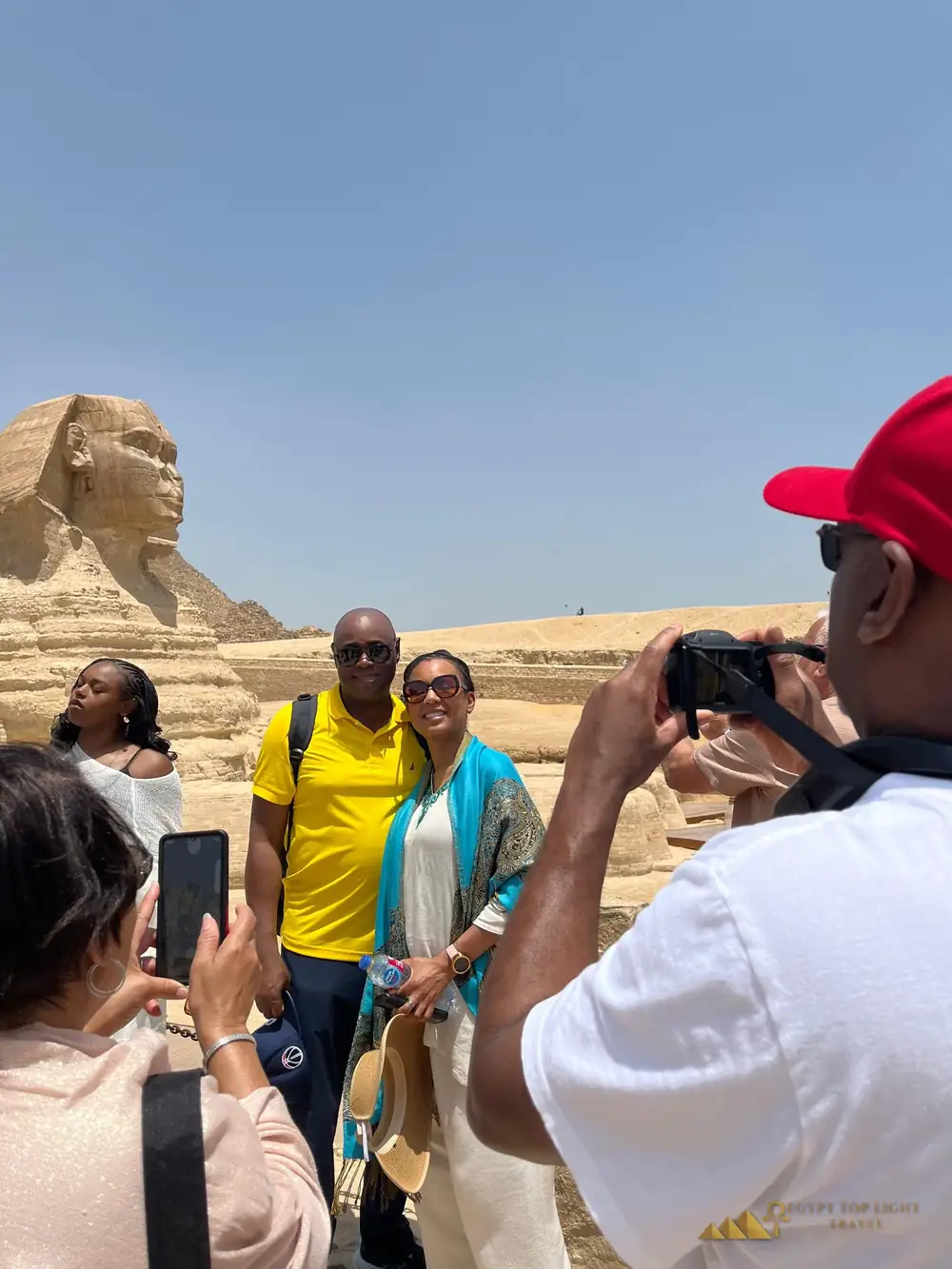
Go in a protective style. Braids, twists, locs and wigs are the low-stress choice for most of our guests. Install them a few days before you fly so the tension settles before a long-haul flight, and you won't spend vacation mornings detangling. Many guests tell us their braids and locs get compliments from Egyptians, not comments.
Moisturise more than you do at home. Plan on refreshing with a leave-in or water-based spray daily, then sealing with an oil or butter. If you wear your hair out, a wash-and-go will last longer with a heavier gel or cream than you normally use.
Cover up at the open-air sites. A silk or satin-lined scarf, a headwrap or a wide-brimmed hat protects your hair and scalp from sun and sand at Giza, the Valley of the Kings and Karnak, and it photographs beautifully. Keep it with you anyway: women cover their hair inside mosques, such as the Alabaster Mosque at the Citadel.
Protect it at night. Hotel and cruise pillowcases are cotton. Pack your bonnet, durag or a satin pillowcase.
Rinse after the pool or the sea. Chlorine and salt water both dry hair out. A quick rinse with clean water and a little conditioner before your hair dries helps a lot.
Skin: sunscreen is not optional
Melanin offers some natural protection, but it is not enough for hours in the Egyptian sun. Dark skin can still burn, and sun exposure makes dark spots and uneven tone worse. Dermatologists recommend a broad-spectrum SPF 30 or higher for every skin tone.
- Find a sunscreen that doesn't leave a cast. Many mineral sunscreens look grey on deeper skin. Tinted mineral formulas, or sunscreens made for melanin-rich skin, solve that. Test yours at home first.
- Reapply. Every two hours outdoors, and after swimming. Ask your guide for a shade stop if you need one.
- Fight the ash. Dry air shows on elbows, knees, hands and shins. Body oil or shea butter after every shower keeps skin from looking dull in photos.
- Don't forget lips and hands. A lip balm with SPF and a small hand cream go in your day bag.
- Drink more water than you think. Dehydration shows in your skin first. Drink bottled water, which is easy to buy everywhere.
Pack your own products
You'll find pharmacies everywhere in Egypt, and they carry sunscreen, basic skincare and general hair products. Products made for type 4 hair, edge control and the brands you trust are much harder to find, so bring enough for the whole trip.
Two practical notes:
- Carry-on liquids. Security rules limit carry-on liquids to small containers (3.4 oz / 100 ml) in one clear bag. Decant into travel bottles, and put the rest in your checked bag.
- Hot tools and power. Egypt uses 220V power and round-pin European plugs (types C and F). A US flat iron or dryer needs to be dual-voltage, plus a plug adapter, or it can burn out. Most hotels have hairdryers.
When to go makes a difference
If heat is your biggest worry, travel between October and April. Winter days in Luxor and Aswan are warm and sunny rather than scorching, and early-morning starts at the temples avoid the worst of the midday sun in any season. Our best time to visit Egypt guide has the month-by-month detail, and visiting Egypt in summer covers the hot months.
How a hosted trip helps
A lot of this is easier when someone local plans the day around you. On our private trips, your guide times outdoor sites for the cooler hours, builds in shade and air-conditioned breaks, keeps water in the vehicle, and works around the things that matter to you. If you want time to get ready before a sunset felucca or a group dinner, tell us and we plan for it.
Planning a girls' trip or travelling solo?
Our private heritage trips are built around Black women travellers, at your pace, with a licensed Egyptologist and your own driver.
See the Black Girls' Trip to EgyptKeep reading
- What to Wear in Egypt: A Style & Comfort Guide for Black Travelers
- Is Egypt Safe for Black Travelers? An Honest Answer From Our Team in Giza
- Egypt for the Black Solo Female Traveler: An Honest Guide
- What to Pack for Egypt, From People Who Live Here
Want a day-by-day plan with your dates and a price? Tell us about your trip and we reply within 24 hours, with no payment until you are happy with the plan.
This is general travel guidance, not medical advice. If you have a skin condition or sensitive skin, ask your dermatologist before you go.
Frequently Asked Questions
What should I do with my natural hair in Egypt?
Most Black travelers do best in a protective style such as braids, twists, locs or a wig, installed a few days before the flight. Moisturise daily with a leave-in and seal with an oil or butter, cover your hair at open-air sites, and sleep in a satin bonnet or on a satin pillowcase.
Do I need sunscreen in Egypt if I have dark skin?
Yes. Dark skin can still burn, and sun exposure worsens dark spots and uneven tone. Use a broad-spectrum SPF 30 or higher every day and reapply every two hours outdoors. Tinted mineral sunscreens avoid the grey cast some formulas leave on deeper skin.
Can I buy Black hair products in Egypt?
Pharmacies across Egypt sell sunscreen and general hair and skincare, but products made for type 4 hair and specific brands are hard to find. Bring enough of your own for the whole trip.
Will my flat iron work in Egypt?
Only if it is dual-voltage. Egypt uses 220V power and round-pin European plugs (types C and F), so a US 110V-only tool can burn out. Bring a plug adapter for dual-voltage tools.
Do women need to cover their hair in Egypt?
Not in general. Women cover their hair inside mosques, so keep a scarf in your day bag. A scarf or hat is also the easiest way to protect your hair from sun and sand at the Pyramids and in Luxor.
Cite this page
Ahmed Ibrahim (2026). “Hair and Skin Care in Egypt: A Practical Guide for Black Travelers”. Egypt Top Light Travel. https://egypttoplight.net/blog/hair-and-skin-care-in-egypt-black-travelers.
You are welcome to quote or reference this page. A link back to the source is appreciated.